Three contractors look at the same flat roof on a Dorchester triple-decker. Two come back within a few hundred dollars of each other; the third is a third cheaper. After more than twenty years of replacing flat roofs around Boston, we can tell you that the low bid is rarely a bargain. It is usually a shorter list of work, and the difference shows up later: as a change order once the old roof is open, as a leak during the first February thaw, or as a roof that needs redoing in eight years instead of thirty.
What a low bid usually leaves out
A flat roof replacement is mostly labor and layers, and every layer is a place to trim the number. Five items disappear from cheap proposals more than any others:
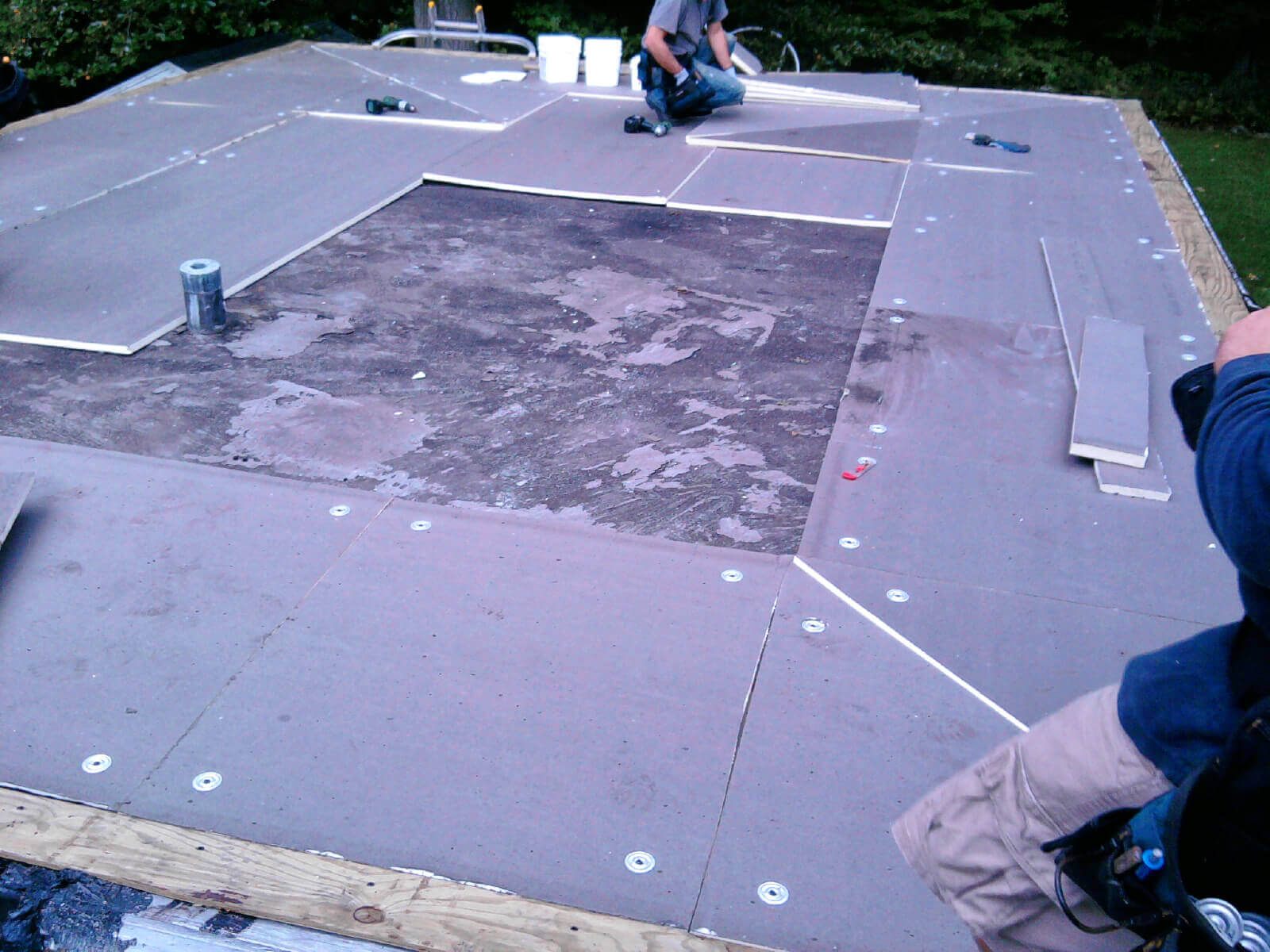
- Tear-off. Removing the old roof down to the deck takes crew hours and a dumpster.
- Insulation. Massachusetts energy code generally calls for added insulation when a low-slope roof is replaced.
- Edge metal and flashings. Drip edge, parapet caps, chimney and skylight flashings are where flat roofs actually leak.
- Permits. Boston and most surrounding towns require a building permit for a re-roof.
- Disposal. An old built-up tar roof on a three-story house weighs several tons, and someone pays to haul it away.
Uninsured labor is your risk, not theirs
The biggest hidden discount in roofing is uninsured labor. Workers' compensation and liability coverage for roofing crews cost real money, and a company that skips them can bid noticeably lower. If someone falls from a three-story roof and the contractor has no coverage, the property owner is the next person a lawyer calls. Ask for certificates of insurance issued by the insurer, confirm they cover roofing, and check the Massachusetts Home Improvement Contractor registration and the Construction Supervisor License.
Thin membranes and thin details
Membrane thickness is a quiet cost cutter. A 45-mil sheet can be sold as a "rubber roof" or a "white roof" just like a 60- or 80-mil product, but it will not shrug off hail, HVAC technicians' boots or the freeze-thaw cycles a low-slope roof goes through every Massachusetts winter. Seams matter just as much: glued or taped seams are cheaper than hot-air welded PVC seams and are the first thing to open under ponding water and ice. Get the manufacturer, product line, thickness and seam method in writing.
No workmanship warranty means no accountability
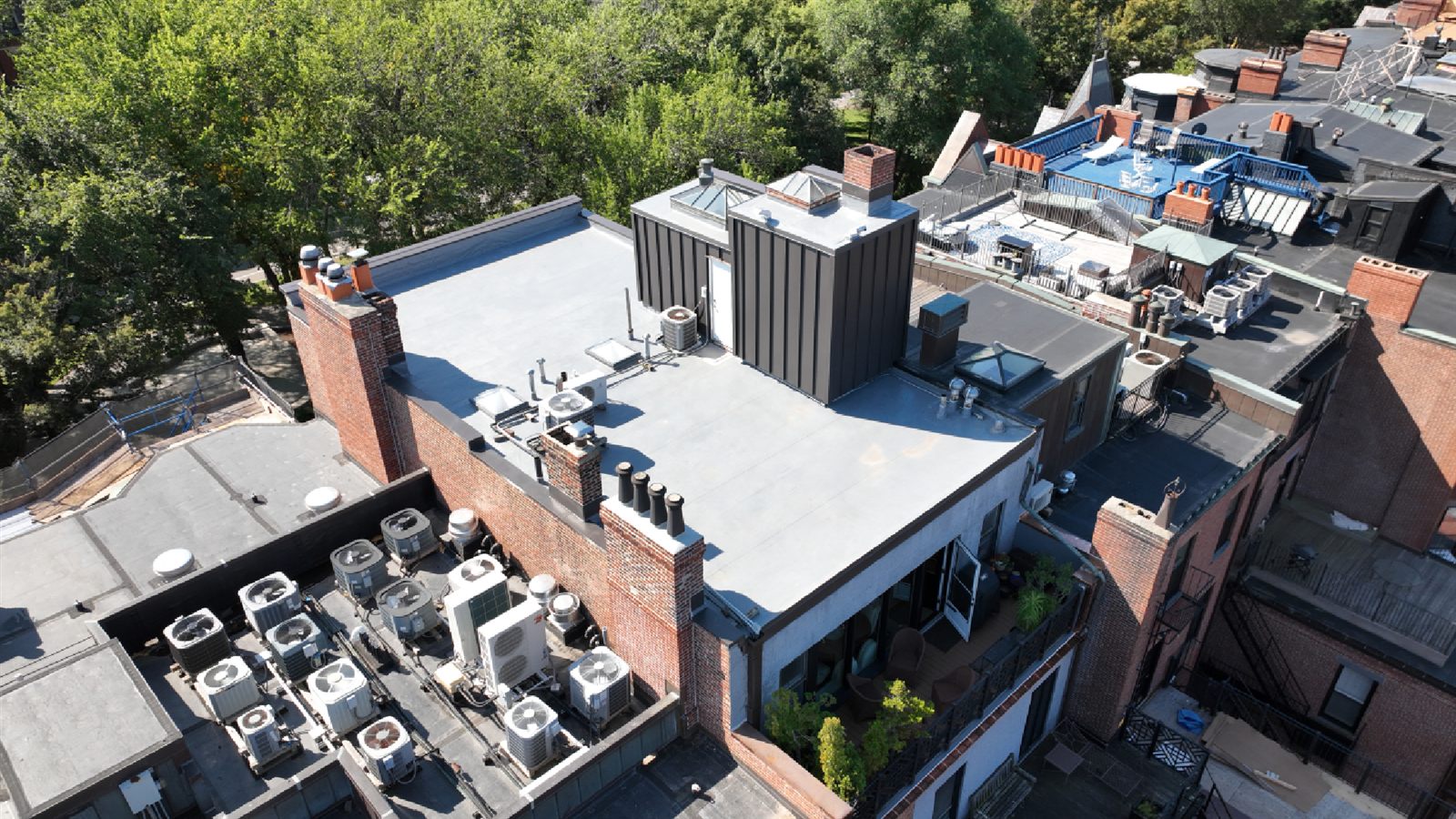
Material warranties come from the manufacturer and cover defects in the sheet, not a seam that was never welded properly or a flashing that stops short of the wall. That is what a workmanship warranty is for, and many low bidders offer one year or nothing. Sannacore backs its work with a 10-year workmanship warranty on top of the lifetime residential material warranty on IB Roof Systems PVC (30 years on commercial buildings).
The change-order business model
Some companies use the low bid simply to get onto your roof. Once the old membrane is off, the surprises start: rotten sheathing, wet insulation, a chimney that needs a cricket. Some of it is genuine; much of it was visible during the estimate and left out on purpose. By then you have an open roof, a weather forecast and no leverage. A serious estimate includes a moisture check or core cut, a look at the top-floor ceiling, and a written per-sheet price for deck repair.
How to compare proposals line by line
Lay the bids side by side and check whether each one answers these questions:
| Line item | What a complete proposal states |
|---|---|
| Tear-off | How many layers come off, and that removal goes down to the deck |
| Deck repair | Price per sheet of plywood and who decides when it is needed |
| Insulation | Type, thickness, R-value, tapered or flat |
| Membrane | Brand, thickness in mils, color and seam method |
| Flashings and edge metal | Walls, chimneys, skylights, curbs and drip edge, each listed |
| Drains and scuppers | New or reused, with an overflow provision for snowmelt |
| Permit and disposal | Who pulls the permit, who pays for the dumpster and cleanup |
| Warranties and insurance | Material and workmanship terms in writing, current certificates |
Where one proposal has a blank and the others have an answer, add that item back at the other bids' pricing. The cheap number usually stops being cheap.
Ask for a locked price
The last question is what happens after you sign. A document headed "estimate" or "subject to site conditions" can drift. Sannacore works on a price-lock basis: the figure in the written proposal is the figure on the final invoice unless you decide to change the scope. That only works when the roof is inspected properly first.
For more on choosing the right roofer, see our guides to flat roof replacement costs in Boston and the red flags to watch for when hiring a contractor. If you already have quotes in hand, mention them when you request an estimate and we will point out anything they leave out. Request a free estimate or call (617) 299-0291, seven days a week.

Denis Tchernov
Founder of Sannacore and a licensed Massachusetts construction supervisor, with more than twenty years of PVC, TPO and rubber roofing across Greater Boston. More about Sannacore.