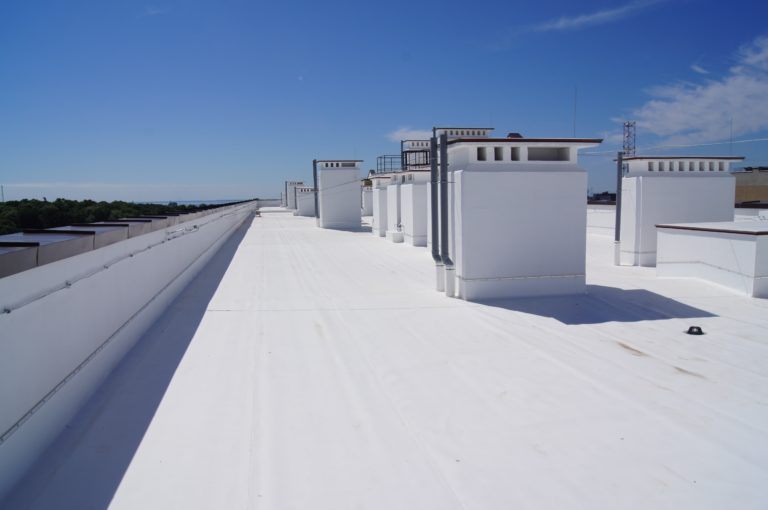
Look across the rooftops of Dorchester, Somerville or the South End and you will still see plenty of old tar and modified bitumen, but when those roofs are replaced the choice usually comes down to two single-ply membranes: black EPDM rubber or a white, gray or tan sheet of PVC. Both keep water out on day one. The differences show up after a dozen New England winters, a few August heat waves and the first grease vent on a restaurant roof.
How each membrane is made and seamed
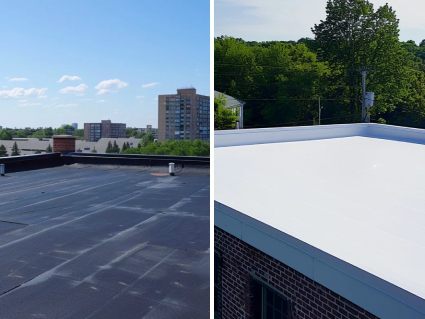
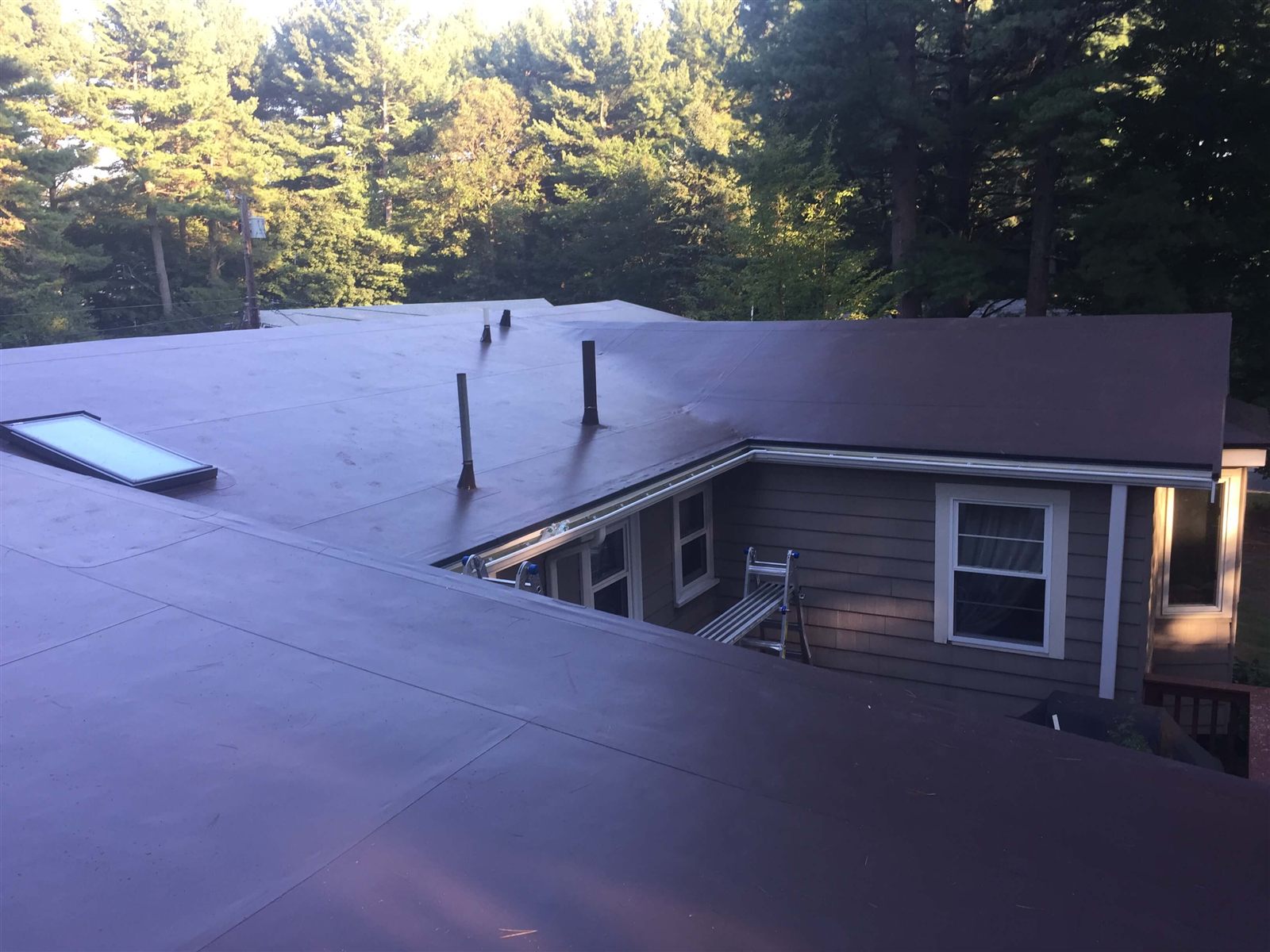
EPDM is a synthetic rubber sheet, usually 45 or 60 mil thick, sold in wide black rolls. It is glued down or ballasted, and overlapping sheets are joined with seam tape or contact adhesive. That joint is only as strong as the glue, which dries under UV, softens in heat and loses grip as the roof moves.
PVC is a reinforced thermoplastic sheet with a polyester scrim inside. We install IB Roof Systems PVC and weld every seam and flashing with hot air, fusing the layers into one continuous sheet. The weld is typically stronger than the membrane around it.
Reflectivity and summer heat
On a July afternoon a black rubber roof on a triple-decker gets far hotter than the air, and that heat soaks into the top-floor unit all evening. White PVC reflects most sunlight and stays much cooler, easing the air-conditioning load and slowing the membrane's aging.
Winter performance in New England
Snow sits on Boston roofs for weeks, melts from the warmth below and refreezes as ice at drains and parapets. Rubber stays flexible in the cold, but its glued seams take the brunt of freeze-thaw movement, which is where winter leaks start. PVC stays pliable too, and a welded seam gives ice no joint to pry open.
Ponding water
Many older Boston flat roofs hold water in low spots for days after a storm. Standing water attacks the tape and adhesive of rubber seams, so we treat ponding on EPDM as a repair priority. PVC copes far better, since a welded seam is watertight, not merely sealed. Still, no membrane fixes poor drainage, so a replacement should correct the slope with tapered insulation or extra drains.
Grease, oil and chemicals
Grease from a restaurant or bakery exhaust fan softens and swells rubber and eats at its seam adhesive; we see that damage on EPDM roofs from Allston to the North End. PVC resists grease, animal fats and most chemicals, making it the standard choice above commercial kitchens.
Lifespan and cost over 20 years
Rubber wins on the first invoice: the material costs less and goes down faster. Over twenty years the picture flips. A glued rubber roof usually lasts 12 to 20 years and needs seam and flashing repairs from about year eight, while a welded PVC roof is built for 25 to 35. Two PVC roofs we installed for one couple more than ten years ago still look brand-new, according to their review. Add the cooling savings and PVC is usually the cheaper roof to own, though it costs more to buy. For the numbers on your own roof, read our guide to flat roof replacement cost in Boston or request a free estimate.
Warranties
IB Roof Systems, whose PVC we are certified to install, backs residential roofs with a lifetime material warranty and commercial roofs with a 30-year one. Every roof we install, PVC or rubber, also carries our 10-year workmanship warranty. Rubber material warranties vary by manufacturer and are generally shorter.
When rubber is still a fine choice
We still install and repair plenty of EPDM. It makes sense when:
- the roof covers a detached garage, shed or porch;
- a rubber roof under ten years old needs only seam or flashing work (see our guide to preventing rubber roof leaks);
- the roof is shaded, drains well and has no kitchen exhaust;
- the budget covers only rubber and the alternative is doing nothing.
Quick comparison
| Feature | PVC (hot-air welded) | Rubber (EPDM, glued or taped) |
|---|---|---|
| Seams | Fused into one sheet | Adhesive or seam tape |
| Typical service life | 25 to 35 years | 12 to 20 years |
| Summer surface | Reflective, cool | Dark, absorbs heat |
| Ponding water | Tolerates it well | Weakens seams |
| Grease and chemicals | Resistant | Vulnerable |
| Warranty with Sannacore | Lifetime residential or 30-year commercial material, plus 10-year workmanship | Manufacturer's term, plus 10-year workmanship |
The verdict
For a triple-decker, brownstone, condo building or any roof with a restaurant beneath it, PVC is the better long-term answer in Boston: welded seams that tolerate standing water, a cool surface and a lifetime manufacturer's material warranty on residential roofs. Choose rubber for small, low-risk roofs or short-horizon fixes. For more depth, browse our roofing tips or learn about our flat roof repair and replacement service.
Not sure what is on your roof now? Phone us at (617) 299-0291 and we will talk it through at no cost, or request a free estimate online. We serve Boston and all of Massachusetts, seven days a week.
Denis Tchernov
Denis Tchernov started Sannacore and is a licensed Massachusetts Construction Supervisor. For over two decades he has welded PVC and repaired rubber roofs around Boston. Read about Sannacore.