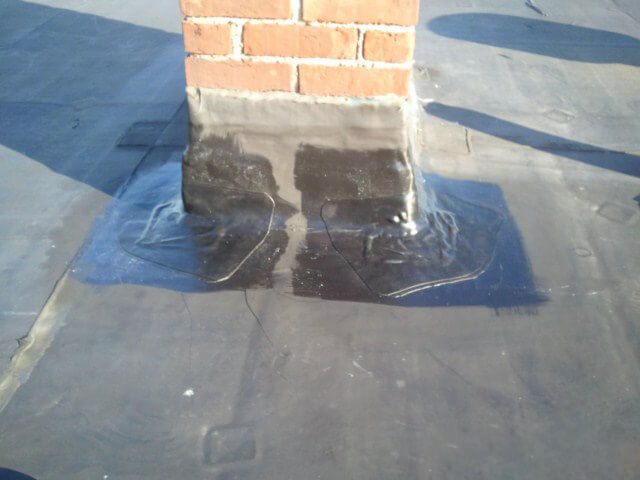
Black EPDM rubber covers many flat roofs on Boston triple-deckers, brownstones and small commercial buildings. The open field of the sheet rarely leaks; trouble starts at joints, edges and anything that passes through the roof. Check those weak points twice a year and you can head off most of the ceiling stains we get called about.
How EPDM seams and adhesives wear out
Rubber roofs are wide sheets joined with contact adhesive or seam tape, and the bond usually fails before the rubber. Sun bakes the lap edges, cold stiffens them, and EPDM shrinks with age, lifting off the base of walls. Look for a seam edge you can slide a fingernail under, small tunnels (fishmouths) along a lap, cracked sealant where seams cross, and rubber stretched tight across corners.
Ponding water, clogged drains and scuppers
A flat roof should dry within a day or two of a storm. Water that stays longer is ponding: it presses on the nearest seam, loads the framing and becomes ice in winter. Low spots often sit over sagging joists or crushed insulation. Clogged outlets make it worse: maple seeds, oak leaves and grit pack drain strainers, scuppers and downspouts. Photos taken the morning after heavy rain show where drainage fails.
Flashing around vents, pipes, chimneys and skylights
Every penetration was sealed by hand; check each one:
- Plumbing vents. Rubber pipe boots crack at the top collar after years of sun, and clamp bands work loose.
- Chimneys. Water often gets in above the membrane, through cracked mortar or loose counterflashing, then runs down behind the rubber.
- Skylights and hatches. Hand-folded curb corners are usually where the membrane pulls away first.
- Exhaust fans. Loose hood screws and dried caulk at the termination bar let wind-driven rain behind the flashing.
Foot traffic and HVAC service damage
EPDM is soft. A dropped screw, a ladder foot or a dragged toolbox can puncture it, often during air-conditioning service, and a condensate line dripping on one spot does its own harm. Ask service companies to tell you when they have been up, check the path to the equipment afterward, and consider walkway pads to the units.
Spring and fall inspections
Twice a year suits the Massachusetts climate:
- Spring, once the snow is gone: look for shovel and ice damage, seams opened by freeze-thaw, and storm debris.
- Fall, after the leaves drop: clear every drain and scupper before the first hard freeze and fix small flashing issues while adhesives can still cure.
Indoors, check top-floor ceilings and closets for fresh brown rings.
Snow and ice in New England winters
Snow itself is rarely the problem. Heat from the building melts the bottom layer, and the meltwater runs toward drains that may be frozen shut, backing up against seams and flashings. After a big nor’easter, clear snow only if the load is a real concern, with a plastic shovel, leaving a few inches on the membrane. Never chip ice off rubber with metal tools.
Safe DIY checks and what needs a pro
Most checks can be made from a hatch, a deck or a top-floor window. If you go up, pick dry, calm weather and stay away from open edges.
| Owner can do | Leave to a roofer |
|---|---|
| Clear leaves from drains and scuppers | Re-bond open seams with primer and seam tape |
| Photograph ponding after a storm | Correct low spots with tapered insulation or extra drains |
| Look for lifted edges and punctures | Replace split pipe boots and chimney flashing |
| Watch top-floor ceilings for stains | Find wet insulation with a moisture or drone survey |
One caution: asphalt roof cement and general-purpose caulk are not made for EPDM; petroleum-based products soften rubber and make a proper patch harder. As a stopgap, use only a product labeled for EPDM. Our rubber roof repair and replacement service covers seams, flashings, drains and full tear-offs.
When a hot-air-welded PVC roof makes sense
Maintenance buys time, but some rubber roofs are past it: seams opening in several places, patches on top of patches, a sheet shrunk away from the walls, wet insulation, or the same area ponding after every storm.
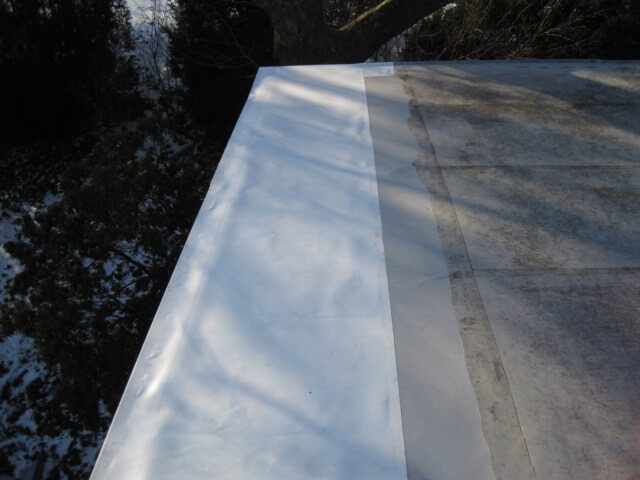
At that stage, compare a new EPDM roof with PVC. PVC sheets are fused with a hot-air welder into one continuous membrane, and the flashing joints at pipes, chimneys and skylights are welded too, so there is no seam adhesive or tape to dry out. As a certified IB Roof Systems installer, Sannacore delivers PVC roofs with a lifetime manufacturer’s material warranty on homes and 30 years on commercial buildings, plus our 10-year workmanship warranty and a locked proposal price. Our PVC vs rubber comparison covers the trade-offs.
Have a leak now, or an aging EPDM roof you want an honest opinion on? Request a free estimate or call (617) 299-0291, 7 AM to 10 PM daily.

Denis Tchernov
Denis started Sannacore and is a licensed Massachusetts construction supervisor. For over twenty years he has repaired and replaced EPDM, PVC and TPO roofs around Boston. About the company.