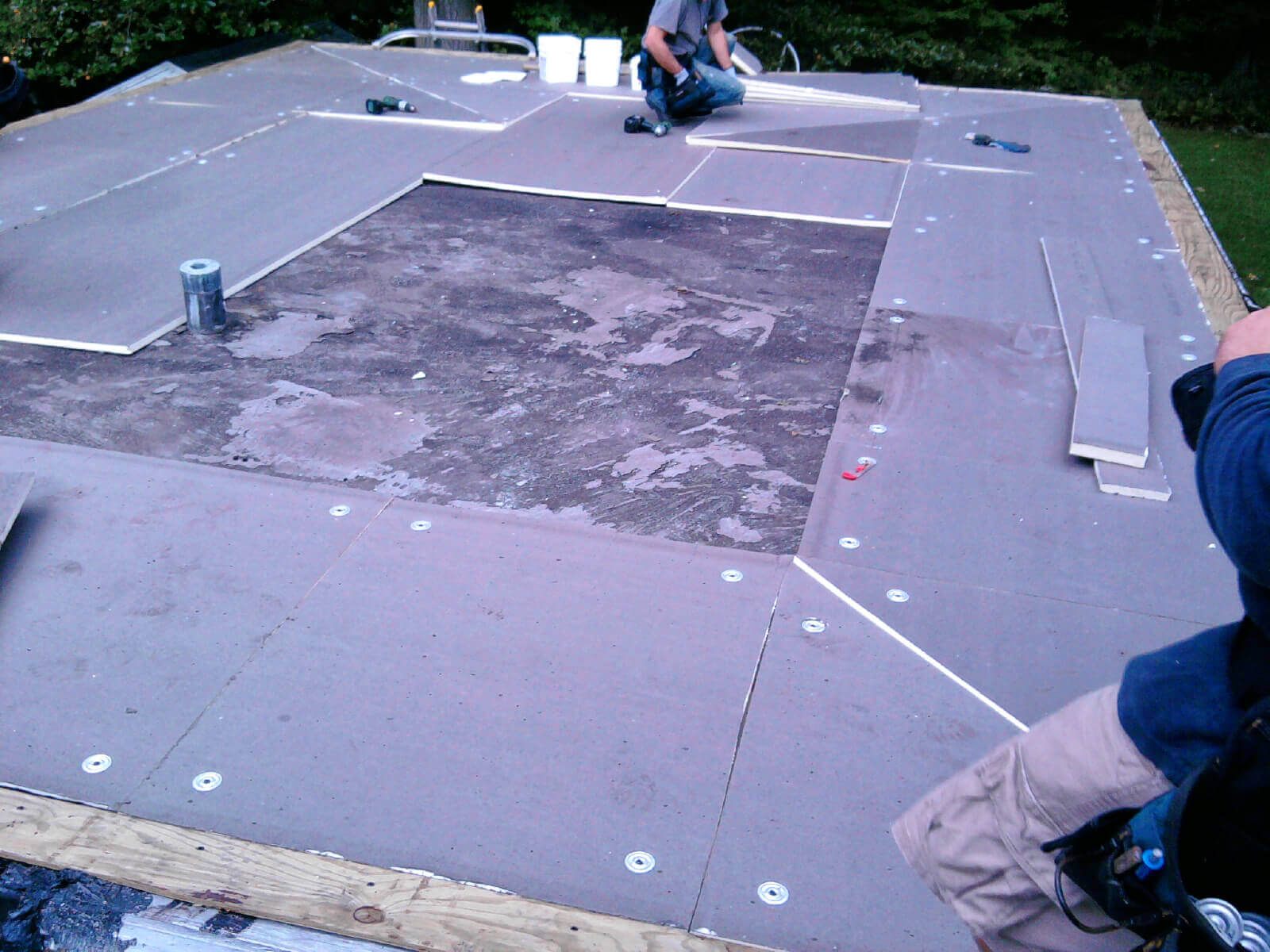
Replacing a flat roof on a Boston triple-decker, a brownstone or a small commercial building is a loud, busy few days. Old membrane and wet insulation come off, a dumpster lands at the curb, and pallets of new material go up. Most of the stress owners feel comes from surprises that could have been settled a week earlier. Here is what to sort out before the first ladder goes up.
Parking, the dumpster and the street
Space is the first problem on a dense Boston street. Tear-off debris goes into a container that should sit as close to the building as possible, so nobody carries soaked rubber half a block. On a house with a driveway, that is where the dumpster goes, so every car has to be out of it the night before. Without a driveway, the container sits at the curb, and in Boston, Cambridge, Somerville or Brookline that requires a permit from the city or town. Ask your contractor who is pulling it, when the container is scheduled to land and when the temporary no-parking signs will go up, because on resident-permit streets every space is taken by evening. Keep hydrants and the sidewalk clear, and park your own vehicles a few houses away: fasteners come down along the building perimeter, and a roofing nail in a tire is a bad start to the week.
Protect the attic and the top floor
Ripping off an old roof shakes the whole deck. Every pried board sends vibration through the rafters, and on older houses with plank decking a surprising amount of grit sifts down through the gaps. If the attic is used for storage, drape plastic sheeting over boxes, clothing and anything dust will cling to. On the top floor, take down mirrors, framed pictures and anything loose on shelves, and throw a sheet over furniture under a skylight or hatch.
Tenants, neighbors and pets
On a two- or three-family building, tenants deserve written notice with the dates, working hours and a phone number for questions. Ask them to bring in anything left on a porch or fire escape below the roof line. Row houses and brownstones share party walls, so abutters on both sides will hear the work as clearly as you do; a quick heads-up keeps that from becoming a complaint.
Pets are the part of the household nobody thinks to warn. Dogs and cats react badly to hours of pounding overhead, and a crew moving through the yard means gates get opened. Board animals for the loud days if you can, or keep them on the lowest floor behind a closed door with water and something familiar. Keep outdoor cats in until the last truck leaves.
Rooftop equipment: HVAC, dishes, skylights and solar
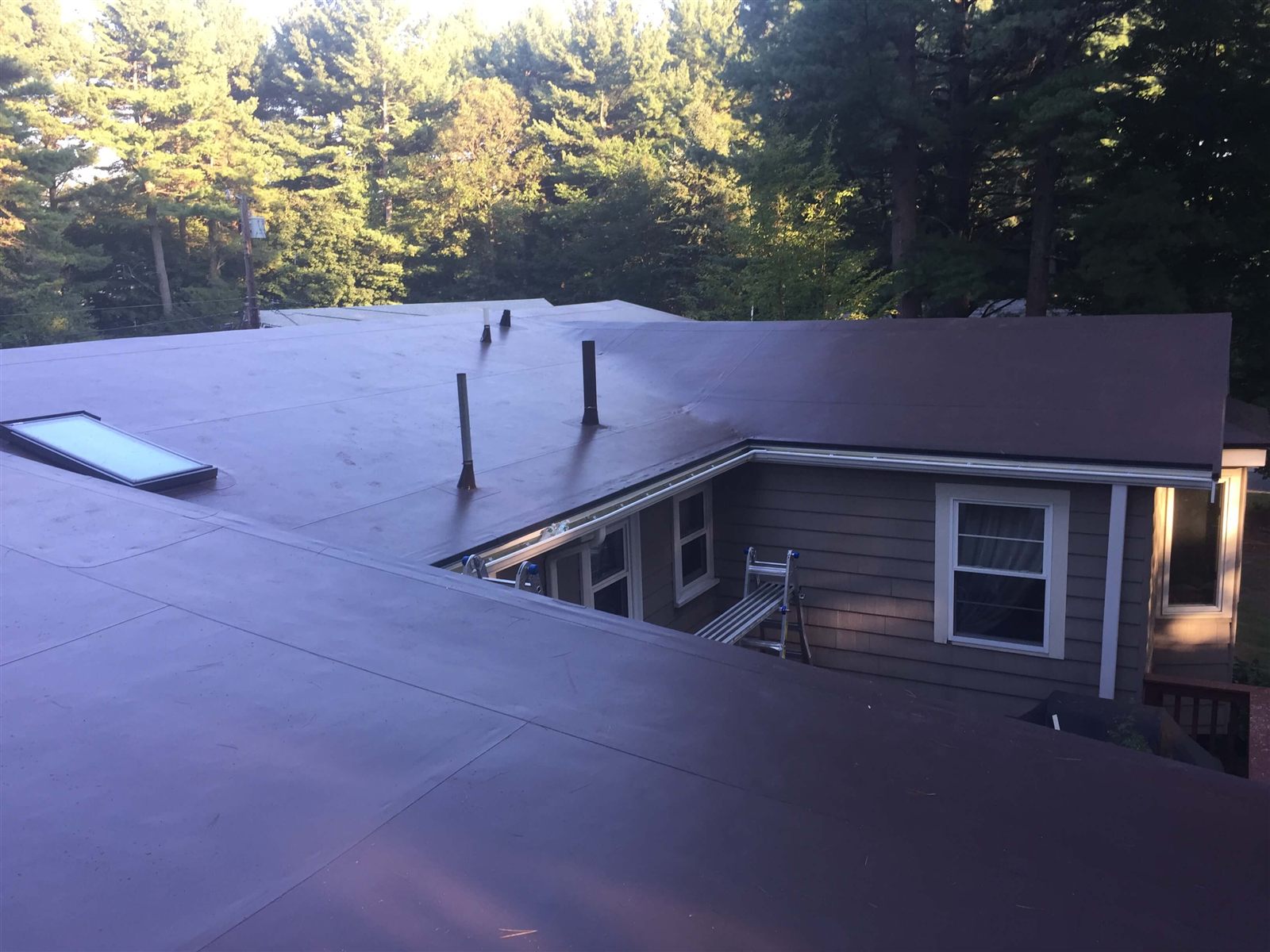
Whatever sits on the roof has to be handled before the membrane goes down. Condensers and mini-split units are lifted onto temporary blocks or set on new curbs; if refrigerant lines must be disconnected, book a licensed HVAC technician for the roofing date. Satellite dishes and antennas are unbolted and remounted on fresh flashing, so expect to re-aim the dish afterward.
Skylights deserve a decision before the job starts. On an old roof they are the most common leak point, and swapping a tired curb skylight during a replacement costs far less than a separate visit later, so ask for skylight installation and replacement to be priced into the same proposal. Existing solar arrays come off the racking before tear-off and go back on afterward in coordination with your solar installer. If panels are in your future, say so now: a solar PV-ready flat roof is planned with the right membrane and mounting details from day one.
What the crew does at the end of each day
New England weather does not wait for a job to finish. A pop-up thunderstorm in July or a cold front in November can put water on an open deck, so a competent crew never tears off more roof than it can close the same day. Each opened section is covered with new membrane or tarped and weighted by quitting time. Loose materials are strapped down against wind, ladders come down or get locked, and a rolling magnet sweeps the driveway, sidewalk and lawn for fasteners. If you walk the property at dusk and see an uncovered deck, call that evening, not the next morning.
Your pre-job checklist
- Confirm who is pulling the curbside container permit and when the no-parking signs go up.
- Give tenants and abutters written notice with dates and working hours.
- Book an HVAC technician if condenser lines need to be disconnected.
- Decide on skylight replacement and future solar before the proposal is finalized.
When you are ready to schedule a PVC, rubber or TPO replacement, request a free estimate, call our replacement line at (978) 381-3838, or reach us at (617) 299-0291, and we will go over the logistics for your street before day one.

Denis Tchernov
Founder of Sannacore and a Massachusetts-licensed construction supervisor with more than 20 years on flat roofs across Greater Boston. More about Sannacore.