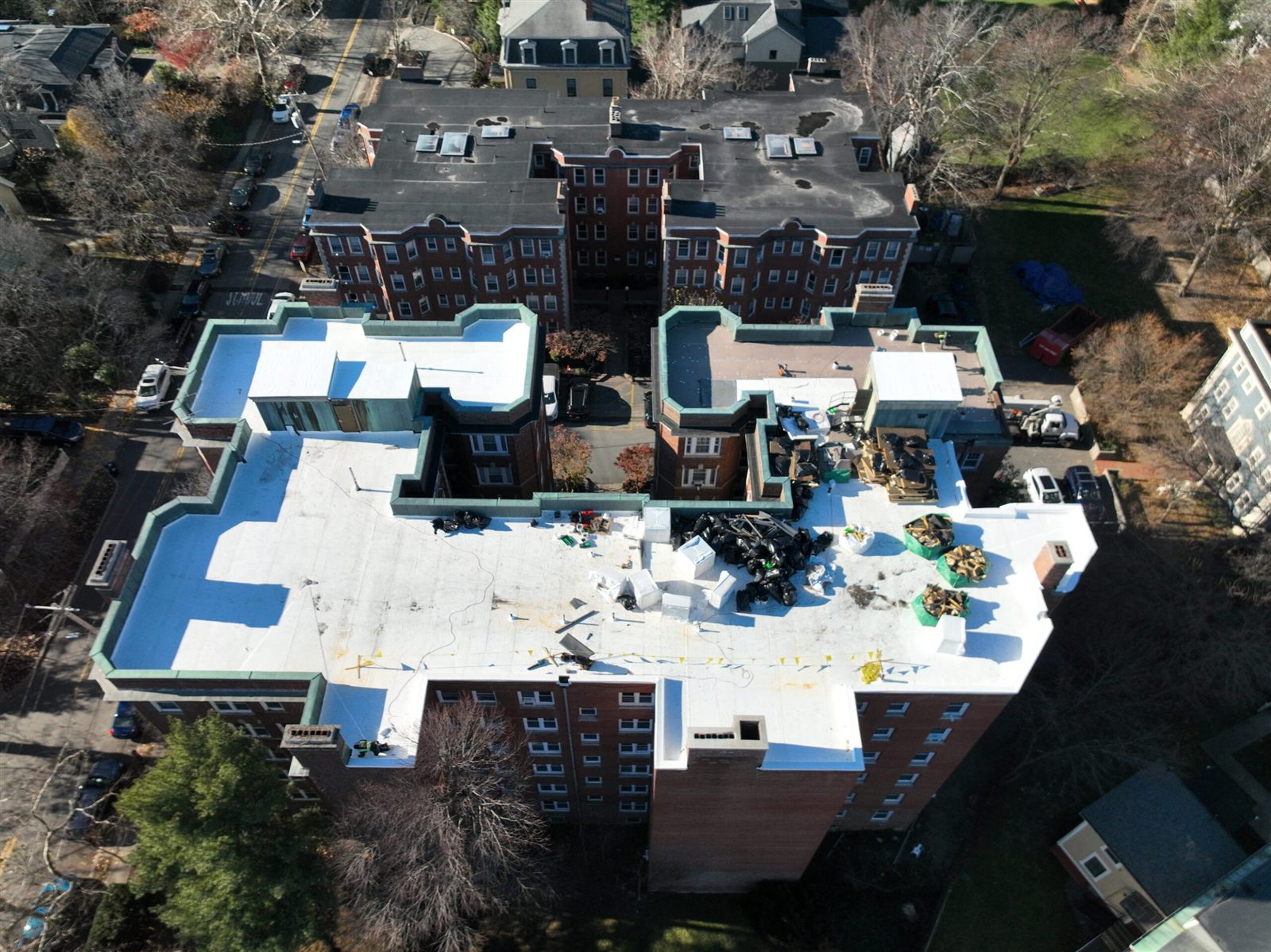
Ask three roofers in Boston to price a new flat roof and you will probably get three numbers that are nowhere near each other. That is not a sign that someone is padding the bill. Low-slope roofs on a Roslindale two-family, a Back Bay brownstone and a Somerville storefront are three very different jobs, even when they cover a similar area.
If you want a ballpark before reading further, request a free estimate and we will give you a realistic starting figure for your roof. Treat any early number as a starting point, not a contract.
What drives the price of a flat roof in Boston
Every proposal we write is built from these variables. Knowing them lets you compare quotes fairly.
- Roof size and shape. A large open rectangle is the cheapest surface to cover per square foot. Roofs broken up by bulkheads, elevation changes and inside corners need more membrane, more flashing and far more hand work.
- Membrane type. EPDM rubber is usually the lowest material cost, TPO sits in the middle and PVC costs the most per roll. PVC seams are hot-air welded rather than glued, which is why we recommend it where water ponds, restaurant exhaust lands or people walk, and why it carries the longest warranty. Our PVC, rubber and TPO service pages describe each system.
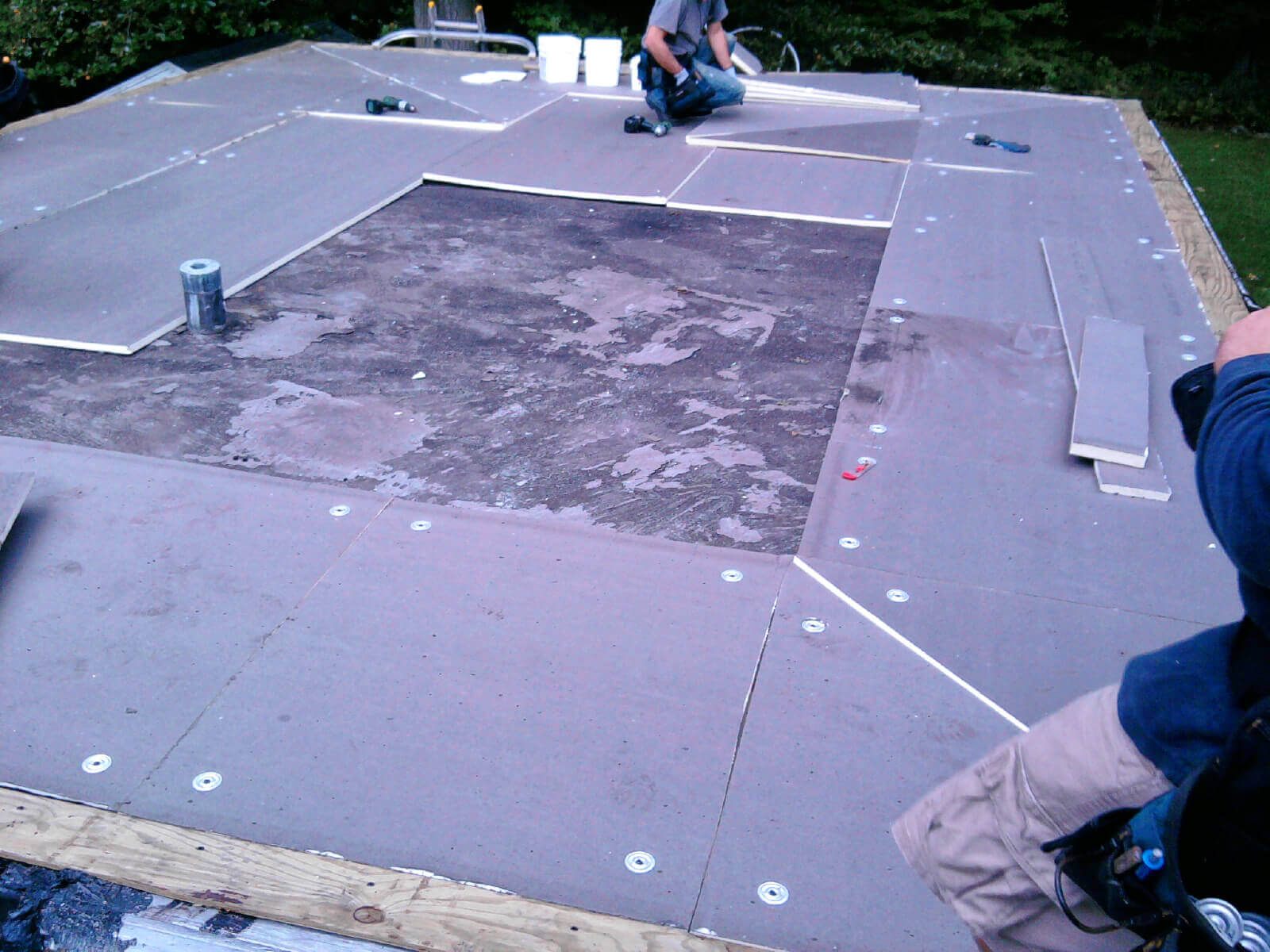
- Tear-off versus overlay. Stripping the old roof to the deck adds labor and disposal, and dumping fees around Boston are not small. It is also the only way to remove wet insulation and replace rotted decking. Building code limits how many roof layers a structure may carry, so an overlay is only an option when the existing roof is dry, sound and single-layer.
- Insulation. New polyiso boards raise the price but cut heating bills through a New England winter, and tapered insulation can finally give a dead-flat roof some slope toward the drains.
- Drains, parapets and skylights. Every drain bowl, scupper, parapet wall, skylight curb, chimney and vent pipe is flashed by hand. Two roofs of identical area can differ sharply in price because one has three penetrations and the other has twenty.
- Access on dense city streets. On a Beacon Hill or North End block the dumpster needs a street-occupancy permit and material often goes up by hoist, which adds time.
- Permits and inspections. Permit fees in Boston and nearby towns scale with the value of the job. The contractor should pull the permit under its own license and schedule the inspection, never ask the homeowner to do it.
Why a per-square-foot quote misleads
A per-square-foot number treats your roof as an empty field. On most Boston buildings the field is the easy part; the money goes into the perimeter and the details. It also ignores what is underneath. Nobody can see soaked insulation or a soft deck from the sidewalk, so a number given before anyone has been up on the roof is not really a quote. Our comparison of PVC and rubber roofs goes deeper into how membrane choice shapes the budget.
How a price-lock proposal protects you
This is why Sannacore works with a price-lock guarantee: the number on the signed proposal is the number on the final invoice unless you change the scope. Rotten sheathing found after tear-off is not a reason to reopen the price: we check the decking and insulation during the estimate, so the proposal already covers what the roof needs. The same document names the membrane brand and thickness, the insulation, the flashing details, the disposal, the permit and the warranties. For IB Roof Systems PVC that means a lifetime material warranty on a home or 30 years on a commercial roof, plus our own 10-year workmanship warranty, all in writing before anyone climbs a ladder.
When a repair beats a replacement
Not every leak calls for a new roof. If the membrane is still flexible, the seams are mostly tight and the water traces back to a single flashing, puncture or clogged drain, a targeted flat roof repair is the sensible spend. Replacement becomes the better investment when rubber is shrinking away from the walls, blisters spread across the field, water sits for days after every storm, or the same leak returns every spring as freeze-thaw opens the seams. A roof inspection with a drone and a few core cuts tells you which side of that line your roof is on.
Getting an accurate number for your roof
The only way to get a firm number is to book a free on-site estimate. We measure the roof, count the penetrations, check the decking and insulation, and send a written proposal with the price locked. Call (617) 299-0291 for repairs or (978) 381-3838 for replacement projects, or request a free estimate online and we will schedule a visit anywhere in Greater Boston.

Denis Tchernov
Founder and licensed construction supervisor at Sannacore. Denis has spent more than 20 years on low-slope roofs across Massachusetts and is a certified installer of IB Roof Systems PVC membranes. Read more about Sannacore.